Leveraging Blockchain to Optimize AI
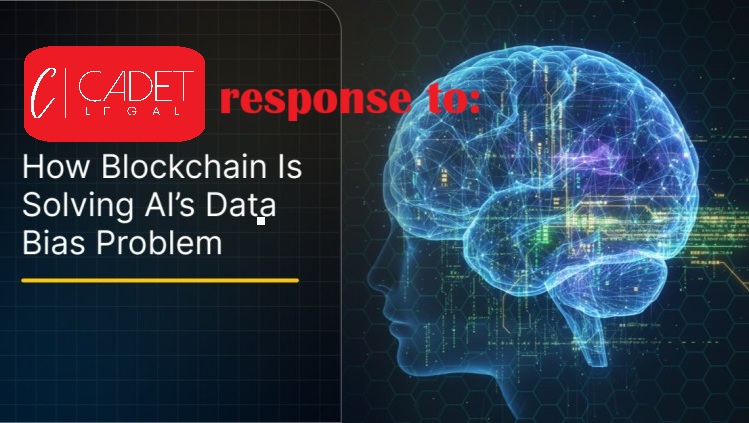
While Blockchain Council's article "How Blockchain Is Solving AI’s Data Bias Problem" focuses on the potential of blockchain to fix the (important) issue of data bias, we also have also been thinking a lot lately about its potential in the context of intellectual property. Case in point – see the image below. Ignoring the frozen-in-third-grade penmanship here, note the first prediction for the of future of IP/tech that I jotted down a month ago at a conference.

We would summarize the big takeaway from the Blockchain Council article as follows: although AI promises fairness, it can often mirror human bias due to flawed data. In this context, blockchain has the potential to add transparency and accountability. By storing each data transaction on an immutable distributed ledger, blockchain could facilitate full provenance, traceability, and verification.
We agree with this in principle. However, we do see some regulatory and practical legal challenges to overcome if we are ever to realize the potential of blockchain to enhance AI trust.
DATA PRIVACY. Data recorded on immutable ledgers can conflict with privacy rights, particularly in more restrictive jurisdictions like the EU. Consider, for example, how to deal with the right to be forgotten under GDPR. This tension raises questions about how personal or sensitive data can be stored, shared, and deleted when it is cryptographically secured and permanently traceable. Additionally, cross-border data flows complicate compliance, as blockchain networks often span multiple jurisdictions with differing regulatory frameworks.
IP ISSUES. While the verification capabilities of blockchain could streamline certain aspects of IP management, it could also create complications. The openness of blockchain could expose proprietary AI models or data sources. Additionally, determining ownership and accountability becomes complex when multiple entities contribute to a decentralized AI system.
Ultimately, realizing AI’s ethical potential through blockchain depends not only on technological integration but also on reconciling these innovations with existing legal and regulatory structures. Regulatory agencies are still adapting to these challenges. Many laws designed for centralized databases and identifiable controllers do not fit the anonymous, distributed structure of blockchain and will have to evolve.
Disclaimer. The contents of this article should not be construed as legal (or investment) advice or a legal opinion on any specific facts or circumstances. Your viewing and/or use of the contents of this article do not create an attorney-client relationship with Cadet Legal. The contents are intended for general informational purposes only, and you are urged to consult with counsel concerning your situation and specific legal questions you may have.