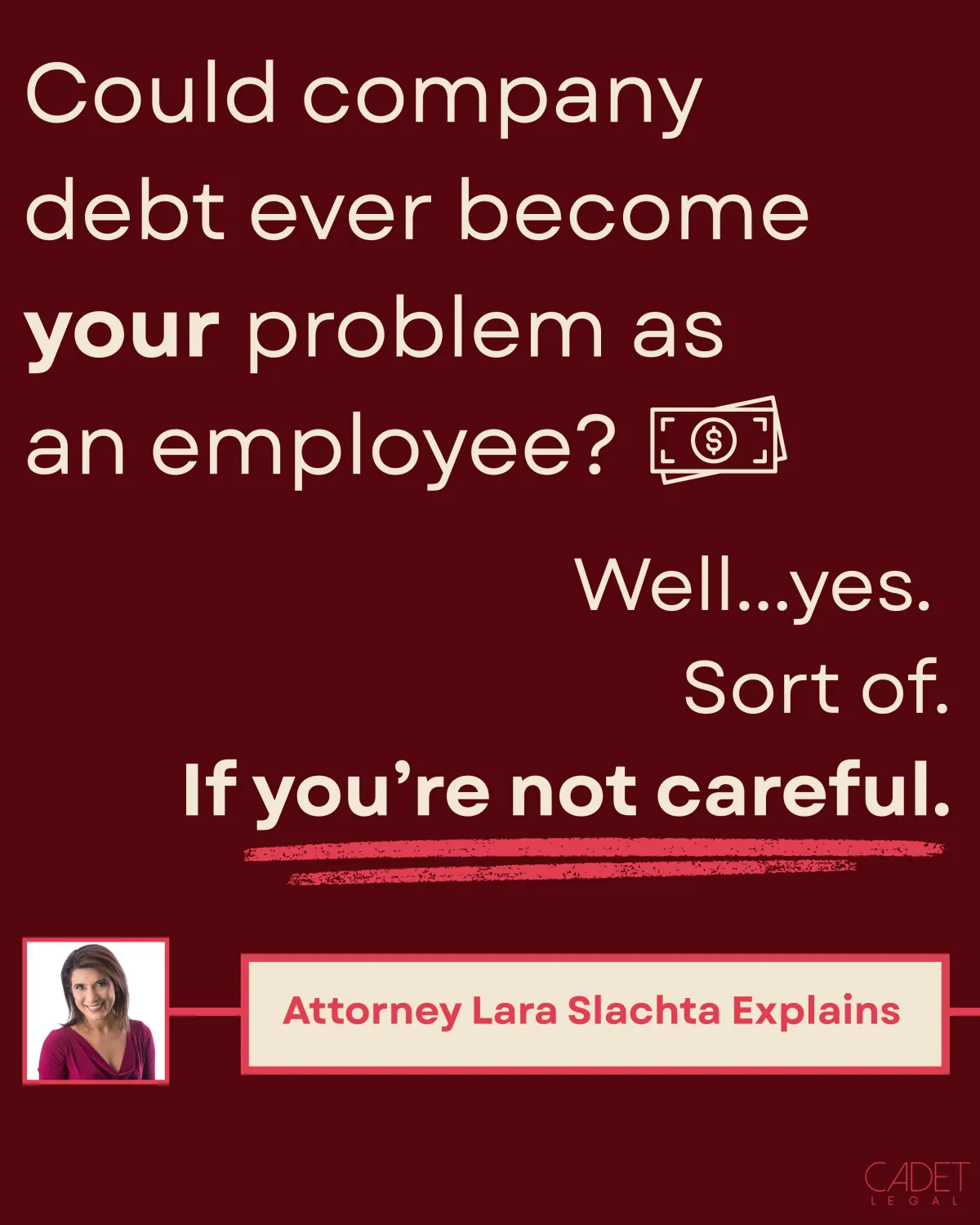
When Your Company’s Debt Becomes Your Problem
Most small and medium-sized business (SMB) owners form a corporation or LLC believing, reasonably, that this should shield their personal assets from business debts. The trouble is that in real‑world state and county courts – especially small‑claims sessions – they might not look past the name on the bottom of a commercial contract to impose personal liability.
A recent small‑claims case in Westborough District Court in Massachusetts shows how a court can end up treating a clearly corporate obligation as a personal one, with serious consequences for the individual involved.
A Massachusetts Small‑Claims Cautionary Tale
In this case, a Massachusetts educational services company (the Company) hired a moving company (Plaintiff) to move furniture, consolidating two commercial locations. Shortly thereafter, the Company went out of business, and the Plaintiff did not get paid. The Plaintiff first submitted the invoices to the Company’s liquidation managers, but were told there was no money left to pay. Next, the Plaintiff sued the employee who handled the logistics and was believed to have signed the contracts on behalf of the Company.
The invoices, prepared by Plaintiff, listed the name of the Company first, followed by the employee’s (misspelled) name. The Court denied the employee’s motion to compel production of the contract that was the operative document in the case. Further, the Court relied solely on the invoices prepared by and provided by the Plaintiff, along with the employee’s admission that he likely signed the contract.
At the small‑claims magistrate and trial court hearings, the employee presented evidence that he had acted in a representative capacity for the Company and that the Plaintiff itself had previously treated the claim as a corporate debt during the Company’s wind‑down.
Despite this, the judge entered judgment against the individual personally, for more than $10,000 plus interest and fees, without any explanation; no analysis of “piercing the corporate veil,” any personal guaranty, or any statutory basis for personal liability.
The employee’s post‑trial motion argued that this result was unjust and contradicted long‑standing Massachusetts corporate‑law principles. In Small Claims Court, whether an appeal is heard, is in the sole discretion of the judge that heard the case in question. In this case, that appeal was denied.
What Massachusetts Law Says About Limited Liability
Massachusetts law is clear: corporations and LLCs are separate legal entities, and their shareholders, directors, officers, and members are not personally liable for ordinary contract debts of the business. Courts can “pierce the corporate veil” and reach individuals only in rare cases, typically where:
·There is commingling of funds or a lack of separate accounts.
·Corporate records and formalities are ignored.
·The entity is intentionally thinly capitalized or used to perpetrate fraud.
Massachusetts appellate courts describe veil‑piercing as a remedy for abuse of the corporate form, not a routine way to collect debts. Yet the small‑claims decision above imposed personal liability without any explicit veil‑piercing analysis, which is precisely why it is such a cautionary tale for SMBs.
Why Small‑Claims Court Is Especially Risky
The small‑claims session is designed to be informal and fast, not to build a careful, detailed record. This informality can undercut the protections business owners expect from corporate‑law doctrines and standard evidentiary rules. Outcomes may hinge on whatever limited documents and impressions reach the judge in a brief hearing, even though the resulting judgment is fully enforceable like any other civil judgment.
Practical Takeaways for SMB Owners
The lessons from this decision resonate beyond Massachusetts. This story is not an argument against forming an entity – it is an argument in favor of treating that entity like a real, separate business every day. SMBs everywhere rely on the legal separation that corporations and LLCs provide. Courts in any state, however, can disregard that protection if owners blur the lines between personal and business dealings. We have seen this issue arise for SMBs and startups across industries, and also emerge as a significant risk in M&A. Even in informal venues like small‑claims court, clear documentation and consistent use of the company name are essential. The principle is simple but universal: corporate formalities are only as strong as the habits that back them up. Treat your business like a business, not an extension of yourself.
Key practices:
·Always contract in the company’s name
·Make sure contracts, online orders, and invoices clearly identify “XYZ, Inc.” or “XYZ, LLC” as the customer, not you personally.
·Sign as “XYZ, Inc., by [Your Name], [Your Title]” so it is obvious you are acting as a representative.
·Keep clean corporate records
oMaintain separate bank accounts and books for the business, and avoid commingling personal and business funds.
oKeep basic minutes or written consents for major decisions, even in small companies.
·Take litigation seriously, even in small claims
oIf a vendor sues you personally for a corporate debt, respond promptly and insist that the court see the actual contract and corporate records.
oUnderstand that “informal” procedure does not mean “informal consequences” – a small‑claims judgment can be just as enforceable as any other.
Don’t wait for a dispute or small‑claims case to test your protections. Keep your records in order, sign documents correctly, and seek legal guidance before problems arise. The small steps you take today to maintain corporate formalities can prevent personal liability tomorrow. We would love to discuss any questions you may have – schedule time via our link above or send us a message.
Disclaimer. The contents of this article should not be construed as legal advice or a legal opinion on any specific facts or circumstances. Your viewing and/or use of the contents of this article do not create an attorney-client relationship with Cadet Legal. The contents are intended for general informational purposes only, and you are urged to consult with counsel concerning your situation and specific legal questions you may have.